
Checking Criminal History in York County
No single county database contains every York County criminal record. Choose the first source by the question being asked. The South Carolina Public Index is best for a filed case and disposition. The county roster answers whether someone is booked now. An incident narrative stays with the arresting police agency. SLED CATCH supplies a statewide, name-based history supported by fingerprint submissions, but it is not a national or registry search.
Before searching, gather the full name, date of birth, possible aliases, the arresting agency, and a case or report number if known. A shared name does not prove identity. Use this sequence to check the same event across its official record trail:
- Search the court index with one or two fields, then narrow the results by court, date, or case number.
- Check the York County roster when the event is recent and current custody matters.
- Request the narrative from the sheriff or city police department that created it.
- Read the court docket for the filed charge, plea, dismissal, verdict, and sentence.
- Use SLED CATCH for a broader South Carolina history or to review an expungement update.
That order separates an allegation from the later court result. It also gives a fallback when one portal has no image or has not caught up with a new event.
York County's Three-Record Trail
An arrest can produce several records within hours. The arresting agency writes a report. Detention staff create a booking entry with charges, bond, and custody status. A magistrate makes the initial judicial record. If prosecutors move forward, the clerk opens a court case. Custodial fingerprints then flow to the South Carolina Law Enforcement Division, while a later disposition should also reach the central repository.
The three main public views are not copies of one another. A booking entry describes one custody event. A court file follows a case number and its actions. A CATCH report organizes fingerprint-supported arrest cycles and reported outcomes around an identity. The county's official government directory helps locate departments when a record falls outside the common channels.
| Record | Best source | Main limit |
|---|---|---|
| Current booking | York inmate roster | Current custody only |
| Filed criminal case | Public Index or court clerk | Images and city coverage vary |
| State history | SLED CATCH | South Carolina only; disposition gaps can occur |
Use the court outcome to test what an arrest or state-history entry seems to imply.
South Carolina Official Background Checks
SLED CATCH is South Carolina's official public name-check product. A guest can search without creating an account. The search uses a last name, first name, and date of birth with starts-with matching; an SSN may be supplied. It covers South Carolina arrests and convictions supported by fingerprints that state or local agencies submitted. It does not search wanted-person data, the sex offender registry, or national records. Aliases, name changes, a wrong birth date, and reporting delay can create false matches or omissions.
The online report costs $25 plus the service charge in effect. Mail requests cost $25 and require the official form, a self-addressed stamped envelope, and an approved noncash payment. Certification or notarization must be requested. The official SLED CATCH page shows current terms and payment details.
The state CJIS repository page identifies the unit behind public dissemination. Its official page is also the source for this view of the repository:
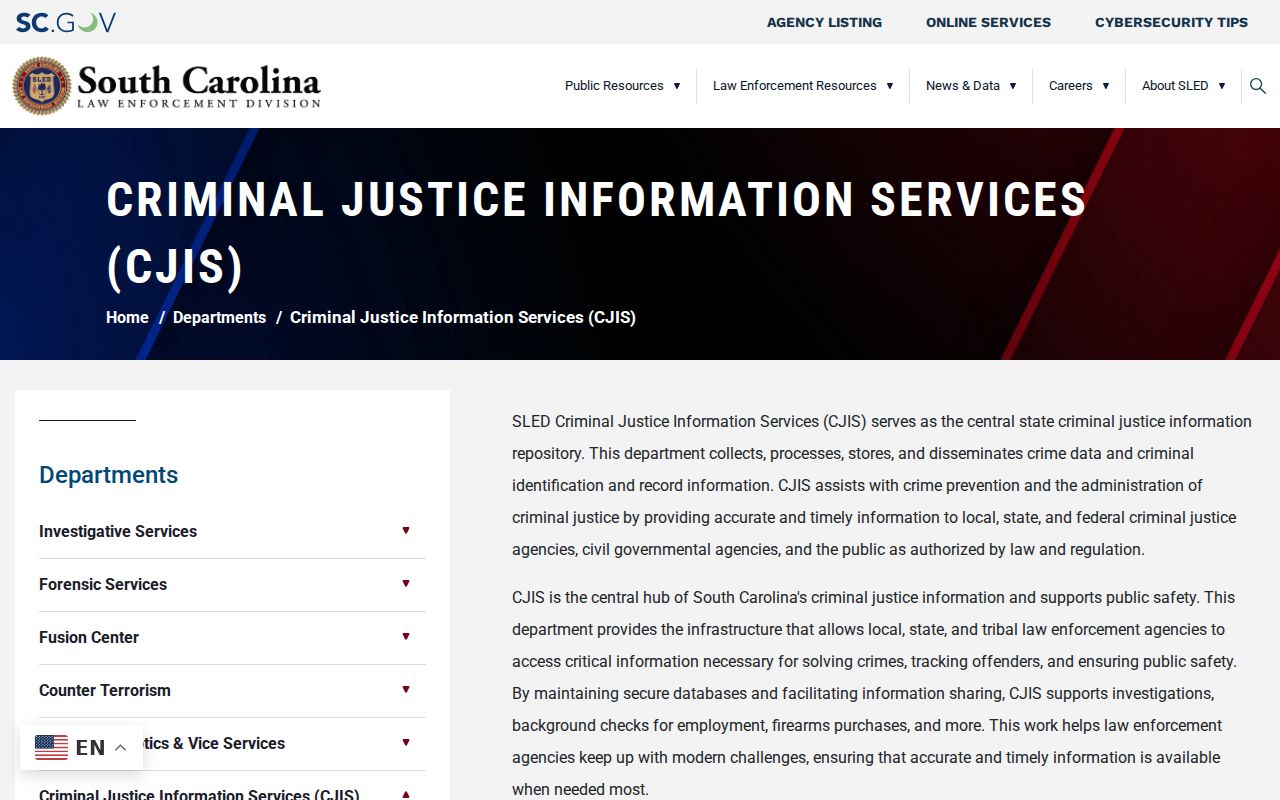
CJIS is the state layer in the record flow, not a substitute for the York court or police file.
York County Public Index Search
The South Carolina Judicial Branch Case Records Search is the main online route to York County criminal court records. Choose York at the county gateway, accept the disclaimer, enter the security code, and click Validate. Pressing Enter does not replace that button. JavaScript and cookies must be enabled, and case details may need a pop-up exception.
Begin with only one or two filters when the case number is unknown. Partial name text and the Contains option can help, but broader searches require more identity checks. Open a linked case number or party. Bold tabs identify available detail. Switch View can combine sections, double arrows expand parties, and a document icon opens an image only where the file supplies one.
| Field | Use | Search note |
|---|---|---|
| Case number | Exact file route | Best when known |
| Name or business | Party search | Partial text and Contains supported |
| Court type or agency | Jurisdiction filter | Useful for summary versus circuit matters |
| Case type or subtype | Subject filter | Narrows criminal and related records |
| Date type and range | Time filter | Filed, disposed, judgment, or arrest dates |
The captured SLED search entry below illustrates why a repository result and a Public Index case need separate checks.
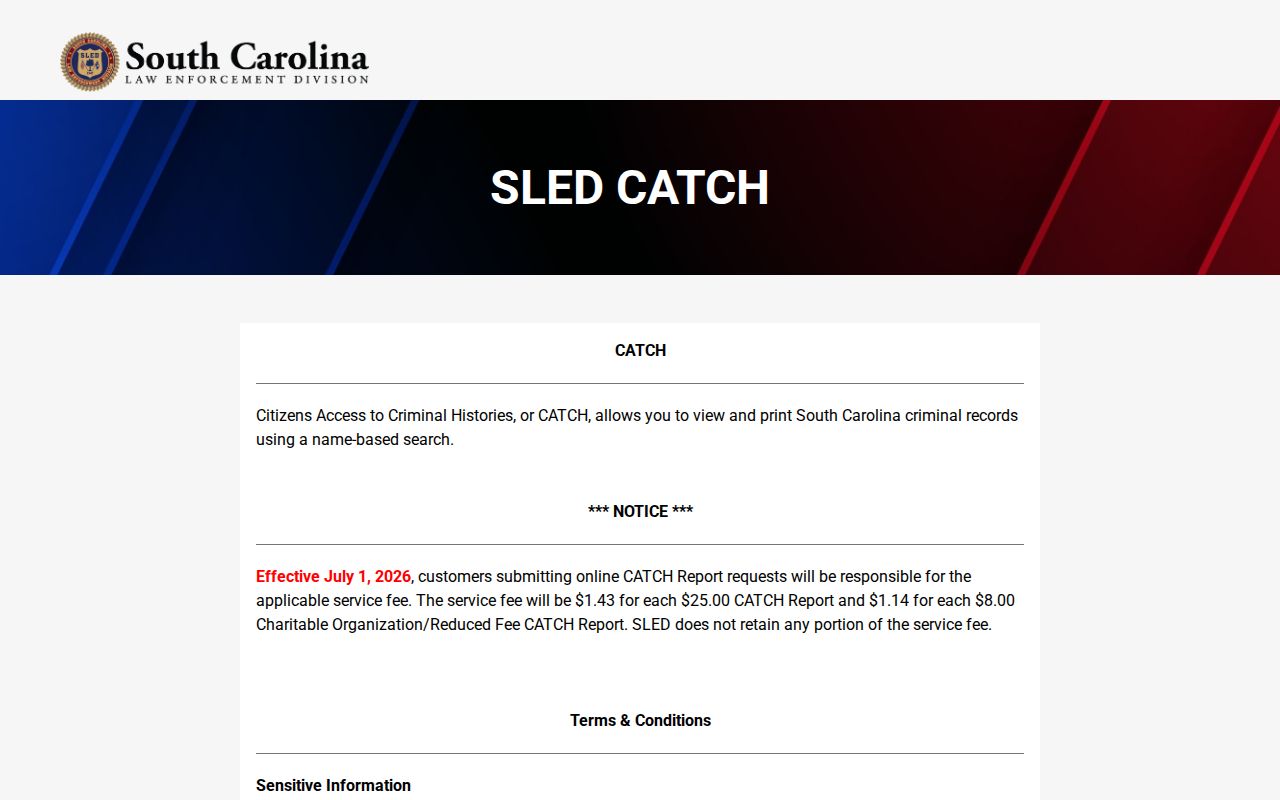
When a court image is absent, contact the clerk rather than assuming the case is unavailable.
Criminal Record Types
York County agencies create records for different stages and legal tasks. The agency report gives the allegation narrative, time, place, officer, and original charges. Detention creates the booking number, photograph, custody status, charges, and bond. A complaint, warrant, indictment, or other charging paper begins a court track. The case file then records parties, actions, documents, financial entries, and the final disposition.
Other sources answer narrower questions. The limited sheriff wanted list is not a full warrant search. SCDC covers state prison, not York's county jail. SCDPPPS maintains prior-day supervision data. SORT publishes qualifying registry information. Juvenile, expunged, victim, personal-identifier, and active investigative material may be restricted.
- Booking
- Jail intake that creates one custody record.
- Disposition
- The recorded result or status that resolves a case or charge.
- True bill
- Grand jury approval of an indictment, not a conviction.
- Nol pros
- The prosecutor's choice not to continue a charge.
- Expungement
- Statutory sealing or destruction of eligible state arrest, charge, and conviction records.
Moss Criminal Records Campus
The Moss Justice Center at 1675 York Highway concentrates criminal functions, but its building identifiers matter. General Sessions works from the main complex. Sheriff Records is at 1675-2A. The Solicitor uses 1675-1A, the Public Defender 1675-1E, York/Bethesda Magistrate 1675-1D, Bond Court 1675-3C, and detention 1675-3A. A visitor can reach the correct campus yet still reach the wrong office.
Criminal docket questions belong with General Sessions, not the historic courthouse used for civil work. The official York County courts page distinguishes those roles. Its captured view provides context for the local court system:
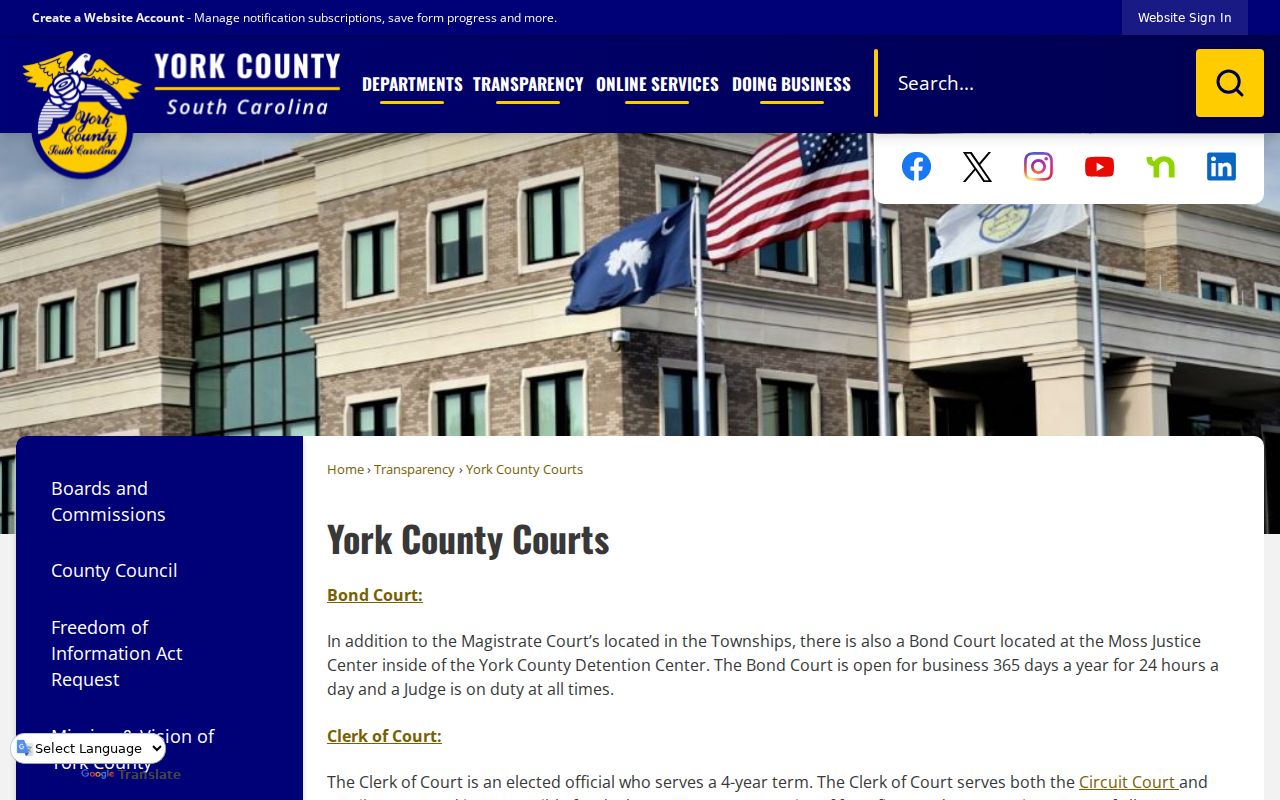
General Sessions criminal-record questions go to 803-628-3036. Jury instructions bar phones, laptops, readers, and similar communication devices, and court can run beyond ordinary business hours. The research found no reliable universal rule for public parking, transit, or lockers, so confirm practical details before a visit.
Inside a York County Criminal Record
A useful reading starts by identifying which record is open. Repository history is organized around names, aliases, birth information, identifying numbers, fingerprint-supported arrest dates, agencies, charges, and reported dispositions. A York County case file instead centers on a case number, parties, court, docket actions, available images, financial entries, and outcome. Booking data centers on one admission to custody.
Do not merge fields from these sources into one supposed master record. Charges can change after booking. A docket may show a dismissal that has not reached the repository. A roster entry can disappear after release while the case remains public.
| Name and identity | Names, aliases, birth details, and other identifiers vary by source. |
|---|---|
| Arrest and booking | Date, agency, booking number, custody, charge, and bond may appear. |
| Court actions | Filed charge, hearings, pleas, motions, and chronological docket events. |
| Disposition | Conviction, acquittal, dismissal, nol pros, or another recorded result. |
| Sentence | Custody, probation, restitution, or other court-ordered terms where public. |
| Current status | County custody, state prison, or supervision requires its own current source. |
Note: A matching name and charge are clues, not enough proof that two entries concern the same person.
York County Jail and Prison Records
The York County current-inmate roster has one optional last-name field, a Search by Last Name button, and a Sort by Last Name option. It is free and requires no account. Results can show a booking date, facility, booking number, release status, total bond, charges, arresting agency, physical descriptors, and a booking image. Its core limit is explicit: only current booking information is available.
The official county roster is the right first stop for current local custody. Someone missing may have been released, transferred, entered under a different spelling, or held briefly by Rock Hill. Call the Detention Center at 803-628-3083 and select option 2 for booking and release information.
The Sheriff's Office page below supplies agency context for York County criminal and custody records.
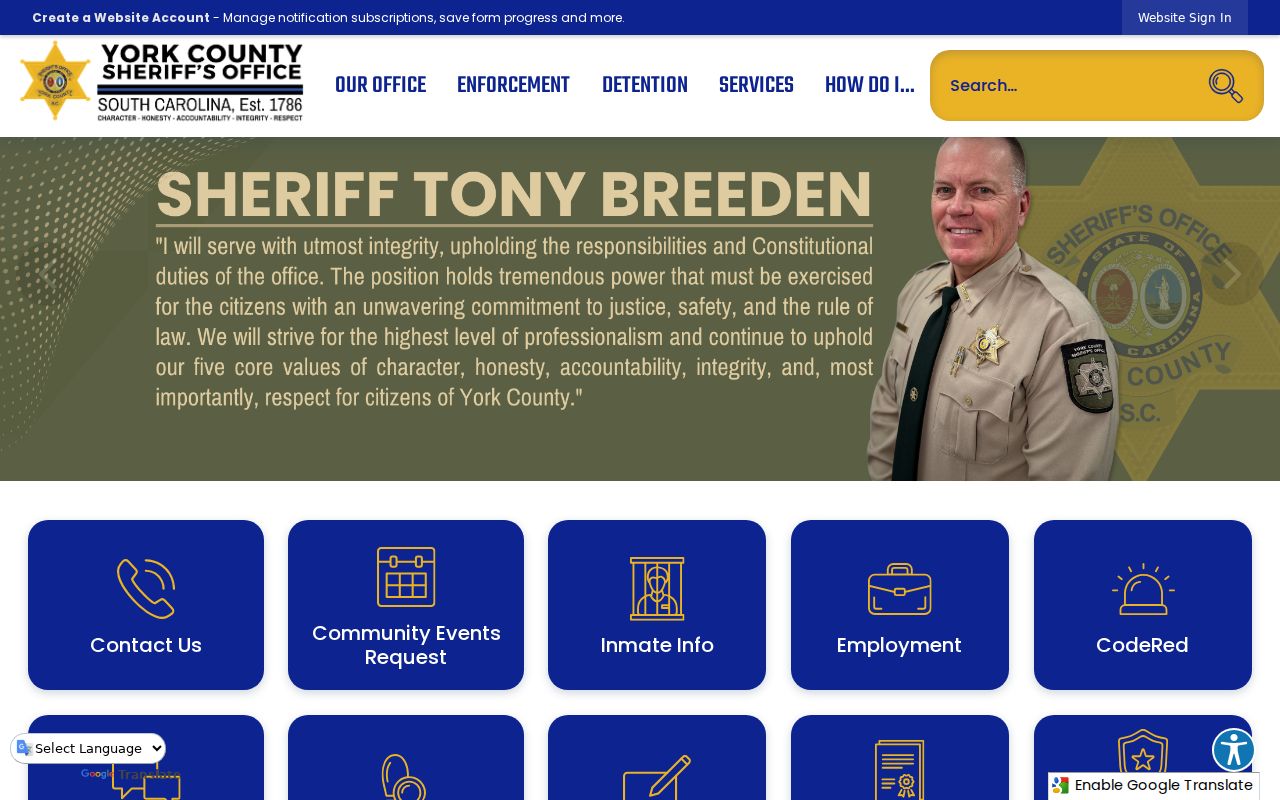
State-sentenced people move to SCDC Inmate Search. That locator refreshes from the prior midnight and excludes county, supervision, juvenile, released, and current-fugitive records.
Public Access Laws in South Carolina
South Carolina law makes many government records open, but public access has limits. The Freedom of Information Act permits inspection or copying of nonexempt agency records and allows reasonable actual-cost fees. Investigative details, juvenile information, victim data, personal identifiers, and expunged material can be withheld or redacted. Public Index also stopped showing home addresses on January 1, 2026. That privacy change is not the same as sealing the case.
Key statutes:
S.C. FOIA §§30-4-30 and 30-4-40 permit access to nonexempt records and identify protected material.
S.C. Code §§23-3-115 and 23-3-120 govern SLED dissemination, fees, fingerprints, and criminal-data reporting.
S.C. Code §§17-22-910 through 950 set routes for eligible expungements.
S.C. Code §23-3-510 increases punishment when registry information is used to commit a crime.
South Carolina law also bars obtaining personal data for commercial solicitation. A public arrest entry does not prove guilt, and SLED may disseminate an arrest history without a corresponding judicial disposition. Check the court result before relying on the entry.
York County Warrant Record Gaps
York County does not publish a complete active-warrant database. The sheriff's Top 10 Wanted page is a selected enforcement list. Its name, physical-description, last-known-address, and charge labels do not make it a full county index. It omits key court details such as a warrant number, issue date, issuing court, and bond.
For questions about one's own possible warrant, call YCSO at 803-628-3059 and verify with the issuing court. A served warrant copy may be requested through the public-information channel or General Sessions Clerk. Bench warrants can come from General Sessions, Family, magistrate, or municipal courts. City coverage in Public Index is incomplete, so a no-result screen is not clearance.
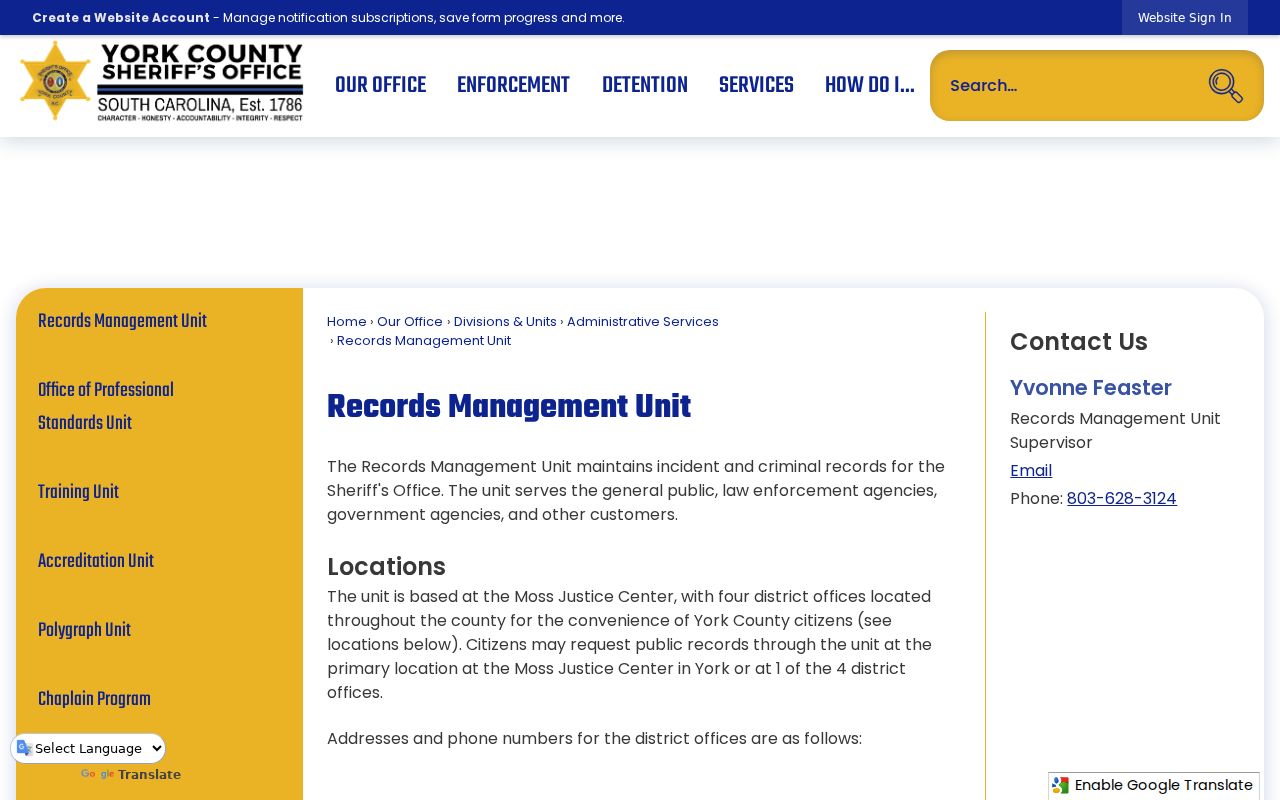
The official Records Management Unit page documents the agency's report counters and is shown here:
Verify status and seek legal guidance before appearing. No source can promise bond, release, or clearance timing.
Sealed, Expunged, and Restricted Records
Expungement removes an eligible South Carolina charge or conviction and seals or destroys state records of arrest, charge, and conviction. General Sessions applications go to the solicitor in the circuit where the offense occurred. York County uses the Sixteenth Circuit Solicitor at 1675-1A York Highway. Eligibility depends on the outcome, offense, prior record, waiting period, and statutory exclusions. A pardon is different and does not erase the conviction.
When fees apply in General Sessions, the researched amounts are $250 for solicitor administration, $25 for SLED verification, and $35 for the clerk filing, each by certified check or money order. Some dismissed or nol-prossed matters and qualifying summary-court outcomes follow different fee rules. Even after relief, sealed law-enforcement material may be retained for statutory periods and is not public.
| Item | Published amount |
|---|---|
| Solicitor administration, when required | $250 |
| SLED verification | $25 |
| Clerk filing | $35 |
| CATCH check after processing | $25 plus online service charge |
Allow four weeks after SLED receives the signed order, then check CATCH. If the entry remains, SLED directs the person to mail a certified order, the recently purchased report, and a stamped return envelope.
York County Arrests Reach SLED
State law requires custodial fingerprints to reach SLED's Central Record Repository within three days, excluding weekends and holidays. Courts and law-enforcement agencies report later case data too. The short statutory path does not mean every public screen updates at once. A new booking may appear before a case is filed, and a CATCH entry may lack a disposition until court reporting catches up.
Record flow: arresting agency › York booking › court filing and disposition › SLED repository.
The captured York County government page gives the local setting for that flow:
The current detention description lists a 621-bed main building and 256-bed annex. Older official pages used a smaller capacity figure. Use current, dated sources rather than combining those figures.
York County Criminal Records by City
City police create their own incident reports, and city courts hold municipal files. That changes the first stop even when the arrest later enters York County detention or a state repository. Rock Hill has its own short-term holding facility and six city-court search modes. Fort Mill routes reports through its records clerk and shares a new civic building with Municipal Court. York Police uses a front-lobby report counter and sends municipal arrestees to county detention under a written agreement.
Rock Hill Criminal Records
75,798 residents · Police, Municipal Court, and a 48-hour holding facility share the local record trail.
Fort Mill Criminal Records
36,244 residents · Police, Municipal Court, and Town Hall now share 205 North White Street.
York Criminal Records
9,830 residents · City reports begin with York Police and bookings move to county detention.
Choose the city page when the arresting agency or municipal court is known. Use the county court search for General Sessions and participating summary-court records.
York County Criminal Record Workload
The sheriff's 2024 annual report counted 6,467 new bookings, 188,351 accumulated inmate-days, 1,932 escorts to General Sessions, and 410 transfers to SCDC. These figures describe the system's workload. They do not mean 6,467 convictions, nor do they identify a person's case result. Each intake can end in release, dismissal, plea, trial, transfer, or another outcome that only the later court and custody records explain.
The Moss campus has changed with that work. The main detention building opened in 1995. YCSO took over the former county prison annex in 2021 and merged operations. County capital planning now describes a 40,253-square-foot booking-center addition and medical renovation scheduled into 2028.
Aggregate counts provide scale. A case number, identity match, and disposition provide the answer for one record. Current agency reports should control when older capacity or workload figures differ.